
Sustainable Fashion·August 31, 2026· 7 min read
Wait, That Purse is Made from Plants? 🌱👛
From Plant Starch to Purses: Rethinking the Materials in Our Everyday Lives
What if the purse on your shoulder began as corn starch or sugarcane? A look at how plant-based PLA and digital manufacturing are reshaping everyday objects — and why sustainability can be colourful, wearable, and unexpectedly beautiful.
When we think about sustainable innovation, our minds often jump to electric vehicles, renewable energy, recycling systems or major industrial technologies.
But what about the objects we interact with every day?
The purse we carry. The artwork on our walls. The decorative pieces on our shelves. The ornaments we hang during the holidays.
What if some of these products could begin not with conventional petroleum-based plastics, but with plants?
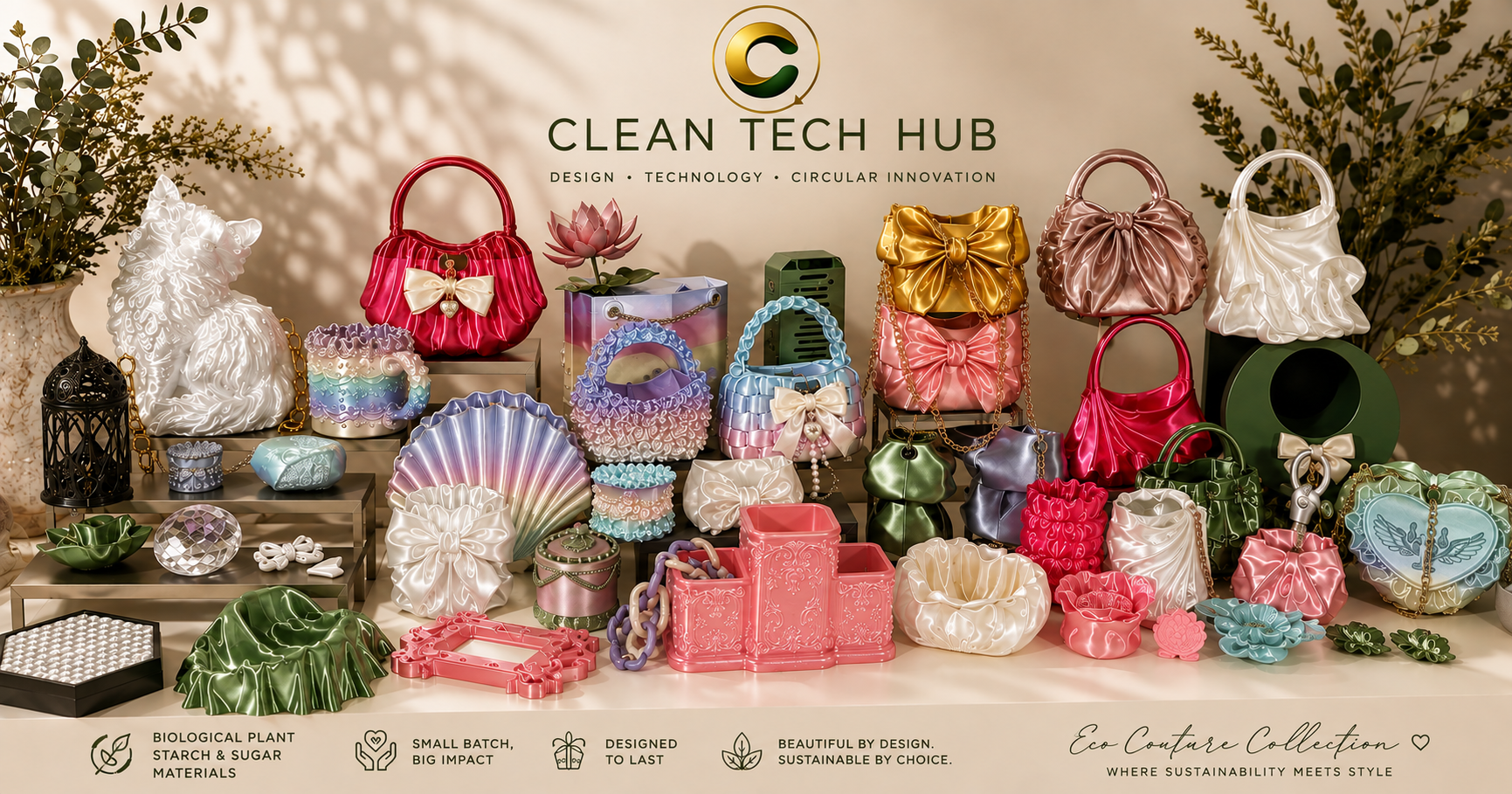
That is an area I have been exploring through Clean Tech Hub: using plant-based materials and digital manufacturing to create functional, beautiful consumer products.
From Plant Starch to Finished Product
One of the materials I work with is PLA, or polylactic acid, a bioplastic commonly produced using renewable plant feedstocks such as corn starch or sugarcane.
Using additive manufacturing, that material can be transformed layer by layer into remarkably different objects.
I have been experimenting with everything from purses and accessories to decorative vessels, planter covers, wall art and seasonal home décor.
The result is an interesting collision of technology, sustainability and design.
A material derived from renewable resources can become an intricate handbag, a sculptural object or a piece of Christmas décor through digital fabrication.
And because the products are digitally manufactured, designs can be changed without creating entirely new conventional tooling. Colours, patterns, dimensions and forms can all be adjusted digitally, opening opportunities for customization and small-batch local production.
Rethinking How Much We Make
There is another part of this technology that I find particularly exciting: the opportunity to manufacture closer to demand.
Traditional consumer manufacturing can involve large production runs, international shipping, warehousing and inventory that may or may not eventually sell.
Digital manufacturing creates another possibility.
A product can exist as a digital file until someone actually wants it.
Instead of asking, “How many should we manufacture and hope we sell?” we can increasingly ask, “What do people actually want us to make?”
That shift has the potential to reduce unnecessary inventory while creating opportunities for localized and highly customized manufacturing.
“A product can exist as a digital file until someone actually wants it.”
Sustainability Still Requires Thought
Plant-based does not automatically mean impact-free.
Materials still require energy and resources to manufacture. Products still need thoughtful end-of-life strategies. PLA also requires specific conditions for industrial composting and should not simply be assumed to break down harmlessly in every environment.
That distinction matters.
Sustainable design is not about finding one perfect material. It is about continually improving the entire system: what something is made from, how it is manufactured, how far it travels, how long it lasts and what happens when it is no longer wanted.
Making Sustainability Something People Want
Perhaps my favourite part of this work is demonstrating that environmental innovation does not always have to look industrial.
Sometimes it can be colourful.
Sometimes it can be artistic.
Sometimes you can wear it on your shoulder.
As we rethink the materials and manufacturing systems behind our everyday lives, there is an enormous opportunity to combine sustainability with creativity rather than treating them as competing goals.
The future of manufacturing may not simply be about making more things.
It may be about making the right things, from better materials, closer to where they are needed, and only when they are needed.
And sometimes, that future might look surprisingly good hanging in your closet. 🌱👜
“Environmental innovation does not always have to look industrial. Sometimes you can wear it on your shoulder.”
Shop the Look
Pieces from the dispatch.
Suggested Reading

